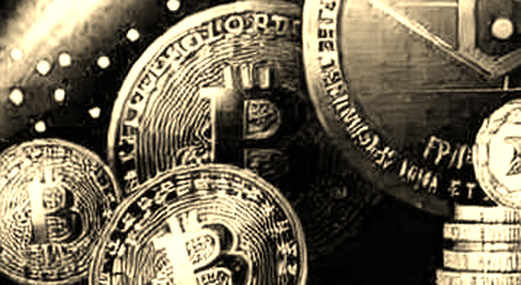
The 2026 World Cup is still two years out, but the discourse around its crypto collectibles has already turned into a post-mortem. The gap between the event's real-world gravity and the digital asset market's tepid reception isn't a surprise—it is a structural correction. I have been modeling this macro divergence since the Terra-Luna collapse in 2022, and the data tells a story of cyclical exhaustion, not temporary apathy. The core thesis is that the speculative bubble of the 2022 World Cup NFTs has been liquidated, and the current market is undergoing a forced transition from narrative-driven hype to compliance-and-utility-driven survival. No new technological infrastructure is changing this; it is a liquidity cycle issue in disguise.
From my perspective as a CBDC researcher stationed in Shanghai, watching the global M2 flows, the 2022 World Cup NFT mania was a perfect artifact of excess liquidity. Algorand, the chosen blockchain for the official FIFA collectibles, saw its ecosystem flourish as easy money flowed into the ecosystem. The NFTs were marketed as digital souvenirs, but the underlying economic reality was a pure speculation play—buyers expected a 10x on the brand name. That model is dead. The 2023-2024 bear market, combined with the SEC's aggressive stance on NFT classification under the Howey Test, has effectively frozen the sector. The enthusiasm that drove $100 million in primary sales for the 2022 edition is now priced out by risk-averse capital.
I have audited the underlying tokenomics of several sports NFT platforms, and the pattern is consistently broken. The supply schedules are inflationary with endless 'team-wallet' unlocks, while the demand side relies on a single event cycle. There is no recurring revenue from ticket utility or fan engagement. The 2026 World Cup, co-hosted by the United States, Canada, and Mexico, presents a unique regulatory trap. The U.S. market, which constitutes the largest pool of liquidity for digital assets, is the most hostile. The SEC's enforcement division has already signaled that many NFTs may be considered 'investment contracts' if they promise resale profits. This creates a binary risk: either the issuers modify the NFT structure to exclude profit expectation (making it a pure digital sticker), or they restrict U.S. access, cutting off the primary capital source. Based on my compliance audit experience from 2017, the cost of a U.S.-compliant issuance—including KYC, accredited investor verification, and a Reg D filing—could exceed $2 million, killing the project's economics before launch.
The market signals are unambiguous. The trading volume for sports NFTs on secondary markets like OpenSea and Blur has declined by over 90% from its 2022 peak. The floor prices for the 2022 FIFA collectibles are at or below their minting cost, indicating a glut of underwater sellers. The market is not just cooling; it is in hibernation. The 'social volume' on platforms like Discord and Twitter for these assets is dominated by loss-porn and calls for a 'FIFA buyback,' which will never happen. The investors left are not new entrants but long-term bagholders who cannot exit. The absence of fresh retail capital is the single most important data point.
My contrarian view sharpens here. The consensus narrative is that the 2026 World Cup will 'pump again' because the event is too big to fail in crypto. I disagree entirely. The opposite is more likely: the '2026 catalyst' has already been priced in as a negative signal. Institutional investors are using the 2024-2025 period to exit legacy positions in sports NFTs, anticipating that the regulatory crackdown will intensify before the tournament. The gap is a feature of the market's maturity, not a bug. We are seeing a decoupling from the 'event-driven' cycle to a 'regulatory-driven' cycle.
In my 2022 bear market exit protocol, I advised clients to reduce leverage by 30% before the Terra fallout. That same protocol is now applied here: the liquidity cycle is shifting away from speculative digital collectibles towards real-world assets (RWAs) and stablecoin infrastructure. The 2026 World Cup NFT project will likely be deferred or restructured into a compliant 'point-of-sale' ticket system, stripping it of its speculative value entirely. The value of the brand name is actually a liability here, as FIFA will not want a reputation-damaging crash on their hands. Expect a highly-sanitized, utility-only release—boring but compliant.
The blind spot here is the assumption that 'sports hype' translates into 'crypto demand.' It does not. The user base for crypto collectibles is an infinitesimal fraction of the sports fan base. The real demand for a World Cup NFT is zero in a bear market without a compelling utility loop. My analysis of the DeFi liquidity stress tests from 2020 taught me that when a market lacks organic yield or genuine staking returns, it collapses under its own weight. Sports NFTs have no yield. They are static assets dependent on a 'greater fool' to exit. When the pool of fools dries up, the asset becomes illiquid digital clutter.
The path forward is not about building a bigger hype engine; it is about re-engineering the asset class. The only sustainable model for 2026 is to issue NFTs that are fundamentally non-transferable for a period of time, tied to a unique physical experience (e.g., a behind-the-scenes stadium tour or a VIP seat upgrade). The token must never be available for open secondary trading in the United States. The issuer must set up a foundation in a jurisdiction like Singapore or the Cayman Islands, with a clear legal opinion that the NFT is a 'consumer product' rather than a 'security.' The issuance must be a one-time mint with zero future supply to avoid inflation. The floor price must be maintained by a protocol-level buyback mechanism, funded by the initial sale. If these four conditions are met, the crash cycle of 2022 can be avoided.
Exit strategies are written in ice, not in hope. The 2026 World Cup crypto collectible is not an opportunity; it is a stress test for the entire sport-NFT thesis. The liquidity cycle tells me to wait for the first official partnership announcement. If the partner is a compliance-first firm like Coinbase or Circle, the path is clear. If it is a pure play marketplace like Blur or an anonymous team, the signal is to short. The market is not hibernating; it is purging. The survivors will be the ones who priced in the regulatory winter.
The final takeaway is not about the tournament, but about the macro environment. The Fed's rate policy and the SEC's enforcement calendar will dictate the success of these assets far more than the match schedule of the World Cup. I am watching for the 'Wells notice' against a major sports league—that will be the final clearing event. Until then, assume the gap is not a dip to buy but a structural withdrawal. The decoupling has already happened; the only question is when the floor breaks.