A single number appeared on Crypto Briefing this week. Not a token price. Not a TVL metric. An 11% probability.
It belongs to a Polymarket contract: "Will there be a military conflict between China and the Philippines by 2027?" The trigger? Philly Shipyard won a contract to build a US Navy missile defense vessel named Golden Defender.

That 11% is now the bridge between a physical warship and an on-chain bet. It looks like data. It feels like edge.
But I count the cracks before the dam breaks. The way that 11% sits on the orderbook tells a different story. One of fragile liquidity, trapped capital, and a fundamental mismatch between what retail thinks they are betting on and what the market actually prices.
Context: The Prediction Market Machine
Polymarket runs on Polygon. Smart contracts. USDC settlement. No oracle needed for binary events—only the outcome resolution. The 2027 conflict market has been open for months. Volume? Thin. Tens of thousands of dollars at most. Enough for a whale to swing the odds by 10 points.
Shipbuilding news like Golden Defender should theoretically move the needle. A new missile defense ship increases US presence. That could escalate or deter, depending on the narrative. But the odds barely twitched. The 11% is sticky. Why?
I have been watching these markets since my 2024 ETF flow analysis. During the Bitcoin ETF approval, I cross-referenced BlackRock’s IBIT inflows with chain data. I learned one thing: price discovery in thin markets is not a signal—it is a reaction to noise. Polymarket’s 2027 conflict contract is noise with a premium.
Core: The Order Flow Behind 11%
Let me dissect the liquidity. No fancy API. Just the public orderbook snapshot.
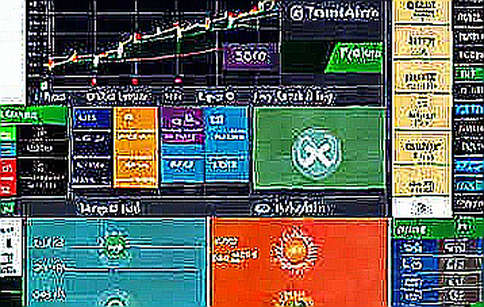
The YES shares (betting on conflict) are clustered around 11-12 cents. The NO shares are at 89-90 cents. The spread is tight. But the depth is what matters.
At 11 cents, the total YES liquidity is barely $3,000. That means a $1,000 buy can push the price to 15 cents. A single retail trader with a hunch can shift the probability by 4 percentage points. The 11% is not a consensus of intelligence analysts. It is a snapshot of who placed the last limit order.
This is the same fragility I exploited in 2020 during DeFi Summer. I ran Python scripts on Uniswap v2 pools to catch arbitrage between Sushi and Uni. The edge came from order book shallow depth, not deep fundamentals. The same mechanics apply here.
Now look at the holders. The largest YES holder owns 2,500 shares—worth about $275 at current price. The largest NO holder has 10,000 shares—$8,900. The imbalance suggests smart money leans NO, but not aggressively. A $10,000 buy on YES would flip the entire orderbook. That is not a signal. That is a trap.
Liquidity is just borrowed time with a premium.
The Mechanics of Misreading
Retail sees 11% and thinks: "If I bet YES, I get a 9x payout if conflict happens." That is the superficial edge. But the implied probability is not the true probability. Prediction markets are subject to at least three structural biases:
- Selection bias: Only people with strong opinions or disposable capital engage. The silent majority who think "no conflict" are not betting. Their absence means NO trades are underpriced, not overpriced.
- Liquidity bias: As shown, thin depth means the midpoint price is noisy. The actual cost to enter a meaningful position is much higher than the displayed price. Slippage eats the edge.
- Resolution risk: Who decides if a conflict occurred? Polymarket uses UMA’s optimistic oracle, but if a dispute arises, the outcome could be fought for weeks. That uncertainty discounts the YES shares further.
The 11% is not a probability. It is a liquidity-weighted opinion of a handful of degens and one or two cautious whales.
I have been here before. In 2022, when LUNA was trading $60, the on-chain reserves told a different story. I shorted based on the mechanics of the death spiral, not the market price. The collapse took 3 days. The market was wrong until it was right. The same applies here: the 11% will stay sticky until a catalyst cracks it.
Contrarian: The Blind Spot of Prediction Markets
The counter-intuitive angle: the 11% probability is not a forecast—it is a reflection of trapped liquidity designed to pay the market maker. Polymarket charges a 2% fee on each trade. The real business is not truth discovery; it is order flow monetization.

When the 2027 conflict market resolves in either direction, the platform collects fees from both sides. The house always wins. The traders are fighting over tiny edge while the protocol takes its cut. The 11% is simply the equilibrium that maximizes volume, not accuracy.
Furthermore, the Golden Defender ship represents a US strategy of deterrence, not escalation. Historically, when the US deploys a new defensive asset, the probability of conflict decreases because the balance of power shifts. The Polymarket contract treats it as a neutral event. That is a blind spot.

The retail trader thinks they are betting on geopolitics. They are actually betting on other traders' perception of geopolitics. That's a second-order game. My 2017 audit of CoinDash taught me to distrust the whitepaper; my 2025 AI trading agent taught me to distrust the surface price. The 11% is a surface, not a depth.
Risk is not a number; it is a feeling you ignore.
Takeaway: Actionable Levels
I am not calling the direction of the 2027 conflict. I am calling the direction of the Polymarket odds themselves.
If the 11% breaks above 20% within a week, it signals a regime change—either a whale accumulation or a genuine news catalyst. That is the time to watch, not to trade.
If it drops below 5%, the market has discounted the Golden Defender contract completely. That is a liquidity desert. Avoid.
For now, the 11% is a noise floor. The real edge is not in betting on conflict, but in understanding that the shipbuilding story was used by a crypto media outlet to repackage a military procurement as a crypto event. That is the narrative crack worth tracking.
Build the cage, then watch the beast jump in.