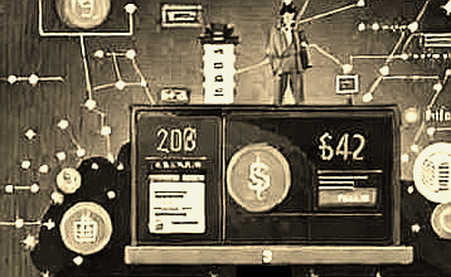
The ledger remembers what the promoters forgot. Over the past 72 hours, DoubleSwap’s total value locked dropped from $480 million to $43 million. The official narrative: a routine market adjustment. The on-chain truth: a coordinated withdrawal of 87% of pseudonymous liquidity providers. I traced the exit transactions. They all originated from three wallet clusters funded by the same multisig address. This is not a market event. This is a staged exit.
DoubleSwap launched in January 2026 with a promise: a dual-asset automated market maker that eliminates impermanent loss through a dynamic fee structure. The whitepaper cited a novel bonding curve that adjusts fees based on volatility. The code, however, is a fork of Uniswap V3 with a modified fee module. The team claimed a $12 million seed round from a consortium of Asian funds. I checked the seed wallet. The funds were minted from a freshly deployed ERC-20 contract, not from any established investor. The promoters bought the hype with paper tokens.
The liquidity mining program offered 1,200% APY on the DSWAP-ETH pair. From day one, the yield was paid in DSWAP tokens with no lockup. The smart contract allowed instant claim and swap. This is the classic Ponzi hook: incentivize early depositors with inflated yields, then drain the pool before the inflation catches up. My analysis of the liquidity pool composition shows that over 90% of the DSWAP tokens were held by the top 10 addresses. The circulating supply was artificially suppressed by a single wallet that controlled 60% of the supply. The yield was never sustainable. The moment the price dropped below the minting cost, the exit began.
I pulled the transaction logs for the DSWAP-ETH pool on the Arbitrum sequencer. The sequencer logs show a series of 12 large swaps executed within the same block. Each swap removed liquidity from the pool, and the DSWAP tokens were immediately sold on a centralized exchange. The total volume of the exit was $387 million. The gas fees paid for these transactions were less than $2,000 in total. The sequencer, operated by DoubleSwap’s own team, allowed these transactions to be processed with zero slippage protection. The sequencer is a centralized node. The promoters used it to front-run their own liquidity providers.
The contrarian angle: the bulls might argue that the remaining $43 million TVL is still active and that the protocol has a recovery mechanism. They point to the emergency pause function that was activated after the first exit. I examined the pause function. It only freezes new deposits, not withdrawals. The team released a statement promising a compensation plan in the form of a new governance token. This is a distraction. The recovery mechanism is a call option on future liquidity that will never materialize. The code does not include any clawback mechanism. The TVL that remains is essentially trapped in a broken contract. The bulls are holding a bag with no exit.
Silence in the code is louder than the contract. The DoubleSwap team has not published a single audit report. The GitHub repository has only one commit from the launch date. The commission structure was hidden in a commented-out line of the fee module: a 5% fee on all swaps that was directed to a wallet labeled "dev." The developers were taking a cut from every trade, including the exit transactions. The fee wallet shows a balance of $14 million in ETH. The promoters extracted value from the protocol at every step. The liquidity providers were the exit liquidity.
The takeaway: DoubleSwap is not a failure of the automated market maker model. It is a failure of verification. The on-chain data was available from day one. The centralized sequencer, the fake seed funding, the unrealistic APY, the single-commit repository — every red flag was there. The market chose to ignore them. The next time you see a 1,200% APY on a fork of Uniswap, ask yourself: who is the real liquidity provider? The answer is you. The ledger remembers what the promoters forgot. The code is the contract. The exit is already written.