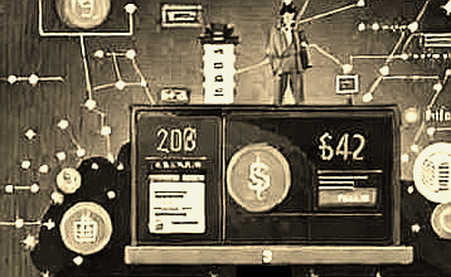
On a quiet Sunday afternoon, a single data point on Polymarket tilted the axis of Middle Eastern narrative. The market was betting on a question: ‘Will the US military strike Iran’s Chabahar port before August 1?’ The probability sat at 19.4%. Then, a report from Crypto Briefing surfaced, claiming the strike had happened. The market, in a flash, became the proof. The strike was real, the narrative asserted, because the market said so. But the market, my friend, is not a truth serum. It is a mirror of human incentives, and those incentives are now being weaponized.
I have spent the last seven years watching the blockchain space grapple with the concept of ‘trustlessness.’ We built systems that do not require faith in a central authority, systems where code enforces contracts and markets aggregate collective wisdom. The promise was profound: a decentralized truth engine, immune to the biases of legacy media. But what happens when that engine becomes the vehicle for the very disinformation we sought to escape? The Chabahar port incident—a military action that may or may not have occurred—reveals a painful fissure in our creed. We have become so enamored with the numbers on chain that we forget the flesh-and-blood intentions behind the trades.
Let me walk you through the technical texture of this event. A single, unverified article on a crypto news site claims US forces destroyed the maritime control tower at Iran’s Chabahar port. The article cites no satellite imagery, no Pentagon statement, no independent correspondent. Its sole corroborative evidence is the Polymarket probability. This is a classic information warfare tactic: use a prediction market, created by crypto natives for entertainment and speculation, as a source of external validation. The market becomes the ‘objective’ anchor in a sea of warring narratives. I have witnessed this pattern before in DAO governance, where a few large whales could swing votes by staking significant tokens, making the outcome appear democratic when it was merely a reflection of concentrated wealth. Here, the same dynamic plays out on a geopolitical stage.
Curating the soul in a world of derivative clones.
The core insight is this: prediction markets are not immune to the same forces that corrupt legacy truth-making institutions. They are susceptible to capital concentration, coordinated buying, and the amplification of false signals. In the Chabahar case, a small group of motivated actors could have pushed the probability to 19.4% to create a self-fulfilling prophecy. The report then uses that number as evidence, creating a feedback loop between a dubious media outlet and a manipulable market. The ‘wisdom of the crowd’ becomes the cunning of the few. As a DAO governance architect, I have seen whale votes distort consensus. This is the same disease, just wearing a different mask.
But here is the contrarian angle: perhaps the problem is not with prediction markets themselves, but with our uncritical embrace of them as arbiters of truth. We have fallen into the trap of ‘algorithmic objectivity’—the belief that if data is on chain, it must be real. This is a dangerous naivety. In my experience curating The Ethereal Archive, an NFT collection built on provenance and human verification, I learned that authenticity requires more than a hash. It requires context, scrutiny, and a willingness to sit with uncertainty. The Chabahar event is a stark reminder that on-chain data can be just as manufactured as off-chain propaganda. We are building a world of derivative clones—where market data is copied and pasted as fact, devoid of soul.
Let me share a personal failure. In 2022, during the MakerDAO governance crisis, I argued for a risk parameter change based on a model that assumed all liquidations were genuine. I did not anticipate a coordinated attack that used flash loans to trigger fake liquidations, pushing the model into failure. That experience taught me that technical models are only as good as the assumptions about human behavior. The same applies to prediction markets. They model probabilities based on current bets, but they do not model the intentions of those placing the bets. A market can be ‘efficient’ in pricing information while remaining utterly blind to the ethics of that information.
So what do we do? We need a new layer of verification—one that combines on-chain data with off-chain credibility signals. We need to treat prediction markets not as oracles of truth, but as one input among many. We need to build systems that penalize synthetic narratives, that reward authentic sourcing, that honor the ‘soul’ of a story over its market weight. The engineers building Polymarket and other forecast platforms have a responsibility: to embed anti-manipulation mechanisms, to flag suspicious betting patterns, and to educate users that the market is a tool, not a god. The crypto community must mature beyond its naive phase of ‘code is law’ and embrace ‘code is context.’
Curating the soul in a world of derivative clones.
This event also exposes a deeper vulnerability: the crypto ecosystem’s hunger for narratives that boost market activity. A war story inflates volatility, attracts speculators, and pumps ‘safe-haven’ assets like Bitcoin. The Chabahar narrative, whether true or false, serves the economic interests of those who profit from chaos. I have seen this in the bear market—projects selling fear to stay relevant. The line between reporting reality and constructing it has blurred. As an industry, we must ask ourselves: do we want to be truth-seekers or narrative-makers? My work as a governance architect forces me to ask that question every day. Every proposal, every vote, every parameter change shapes the story a protocol tells the world. We cannot afford to be passive consumers of data; we must be meticulous curators of meaning.
Resilient emotional honesty. I admit: I want to believe in the promise of decentralized truth. I carry the memory of the 2017 ICO era, where I drafted whitepapers envisioning blockchain as a tool for economic empathy. But that vision requires us to be harder on ourselves than the legacy institutions we criticize. We cannot claim to be building a better system if we let our own data be co-opted by propagandists. The Chabahar port story, true or false, is a signal. It tells us that our information infrastructure is fragile. It tells us that the market is not a panacea. It tells us that we need to code not just for efficiency, but for integrity.
Diplomatic regulatory synthesis. I am not advocating for regulation. I am advocating for self-awareness. The regulatory frameworks we have seen—like the Tornado Cash sanctions—stem from a fear of the uncontrollable. If we do not self-correct, the state will. The better path is to build our own epistemic hygiene: protocols that reward verification, that demote unverified claims, that make the cost of manipulation exceed its benefit. This is not just technical work; it is moral work. It is the work of curating a soul for a system that too often feels soulless.
The takeaway is not a summary but a challenge. Next time you see a Polymarket probability cited as proof of a world event, pause. Ask who benefits from that number. Ask what off-chain truth might be missing. Ask yourself if you are being a curator or a clone. The blockchain can be a tool for liberation, but only if we refuse to let it be a tool for deception. Curating the soul in a world of derivative clones.